

 African Groceries
 Beauty & Care
 Beverages
 Home & Daily Life
 Other
Other Snacks & Candy
 Tobacco & Vape
Ingredients
Yam, taro or cassava: how to identify and cook them
Three roots often displayed together, with different textures and preparation needs.
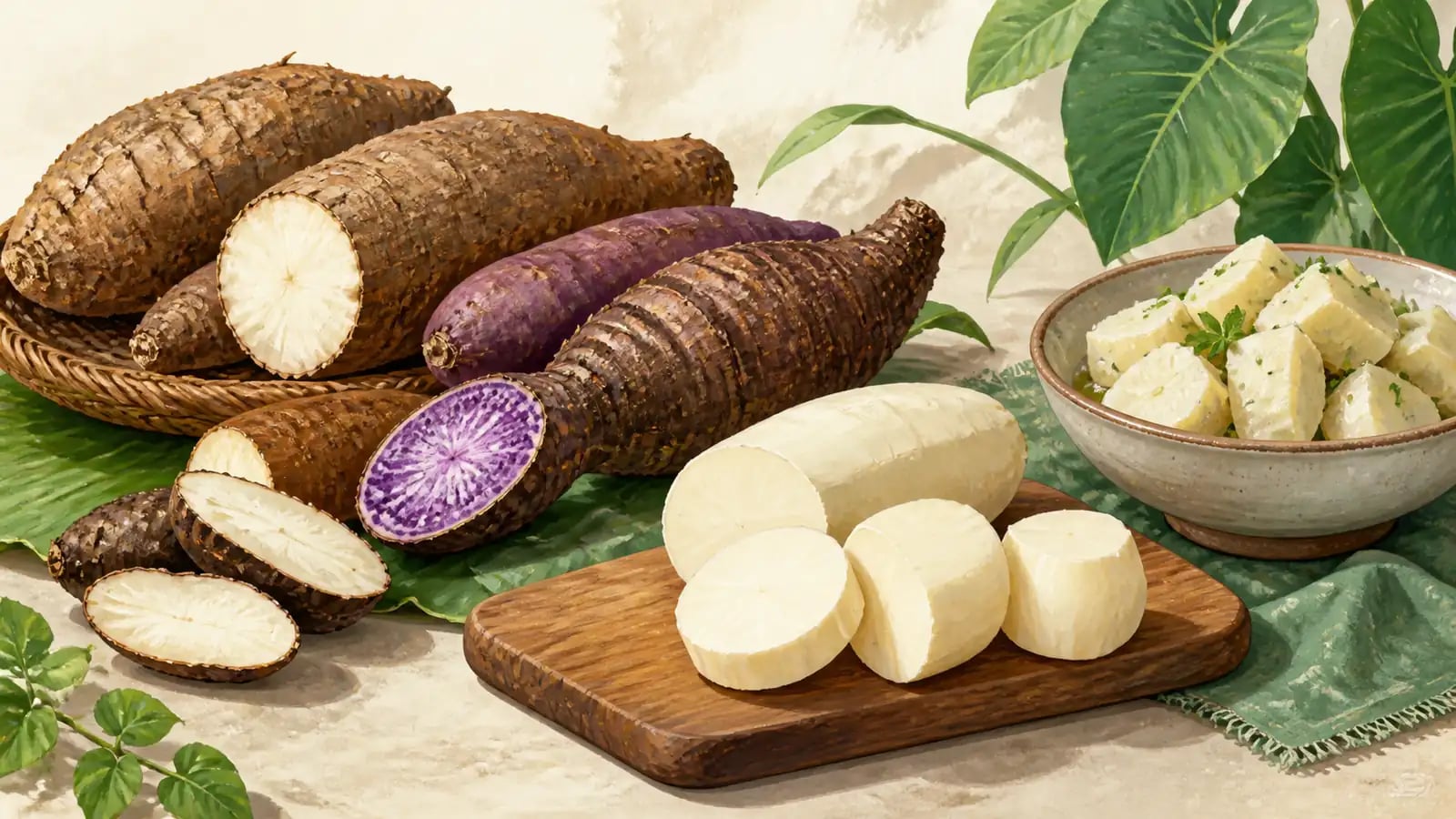
Yam, taro and cassava may look similar on a market display, but their flesh, texture and preparation differ. The product label is the primary reference, especially for cut or frozen products.
How to tell them apart
- Yam often has thick rough skin and white or cream flesh.
- Cassava has a brown outer layer and firm white flesh; it must be properly processed and cooked.
- Taro is generally smaller and sometimes ringed, with pale flesh that may be flecked depending on the variety.
Kitchen uses
- Yam works well boiled in pieces, pounded, fried or roasted.
- After appropriate processing, cassava is boiled or made into flour, attiéké or chikwangue.
- Taro becomes tender in soup, stew or mash after thorough cooking.
Practical tip
Peel carefully, do not eat these roots raw and follow supplier instructions. Correct processing is particularly important for cassava.
FAQ
Can they replace one another?
Sometimes in a stew, but the texture changes. Yam is flourier, while taro and cassava behave differently as they cook.