

 African Groceries
 Beauty & Care
 Beverages
 Home & Daily Life
 Other
Other Snacks & Candy
 Tobacco & Vape
Ingredients
Cassava in Belgium — where to buy it fresh and how to cook it right
The essential tuber of African cooking, cassava remains hard to find outside major Belgian cities. Here's the full guide: varieties, reliable sellers, storage and five easy recipes.
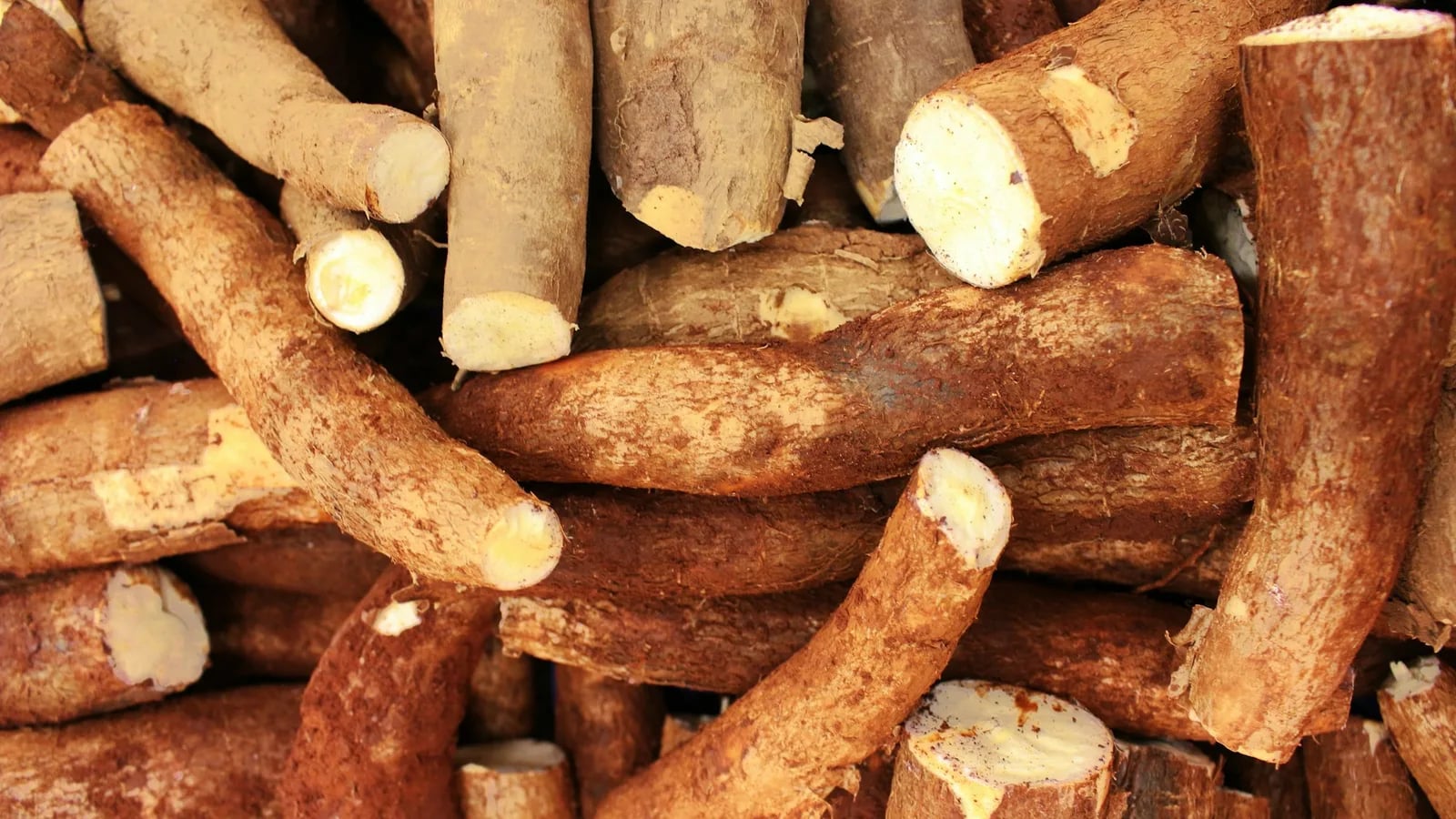
Cassava is the bread of Central Africa. A tuber with white firm flesh, rich in starch, used to make foufou, chikwangue, fries, attiéké, and much more. In Belgium, however, it remains hard to find — especially fresh. This guide gathers everything you need to know: varieties, reliable sellers, storage, and five recipes to get started.
Why cassava matters so much in African cooking
Originally from South America, cassava arrived in Africa in the 16th century via the Portuguese. In 400 years, it became the staple food of over 500 million people, from Cameroon to the Democratic Republic of Congo, via Ivory Coast, Benin and Nigeria.
Why? Because it grows everywhere, resists drought, keeps long once processed, and provides cheap energy. In cooking, its neutrality is its strength: it accompanies strong sauces (mafé, ndolé, pondu) without ever stealing the show.
Sweet cassava or bitter cassava: what the distinction does and does not tell you
Cassava is usually sorted into two groups:
- So-called sweet cassava (Manihot esculenta, food varieties) — the one sold for consumption, with a lower content of cyanogenic compounds.
- So-called bitter cassava — destined for processing (flour, starch, tapioca) after lengthy treatments: soaking, grating, fermenting, drying.
The distinction is useful, but it is not enough to assess the risk. Cassava's content of cyanogenic compounds varies with the variety, the soil, the season and growing conditions, and taste does not always settle the question. Keep these four rules instead:
- Only buy cassava sold for food consumption, from a seller who knows where their stock comes from.
- Follow the supplier's or manufacturer's instructions — on the packaging for frozen roots and flour, from the shopkeeper for fresh ones. They override any general timing found online, including in this article.
- Never eat raw cassava, whatever the variety.
- Do not prepare a bitter root of unknown origin at home. Bitter varieties require controlled treatments that belong to processing, not to home cooking.
In every case: peel the root, remove the central thread (the hard fibre running through it), and cook it through — never al dente.
Where to buy fresh cassava in Belgium
Brussels and surroundings
- Matongé (Chaussée de Wavre, Ixelles) — several Congolese groceries, fresh on Wednesday and Saturday mornings
- La Chasse Market (Etterbeek, Tuesday/Friday) — regular African stand
- Anneessens Square (1000 Brussels, Wednesday/Sunday) — good choice of tubers
Antwerp, Ghent, Liège
- Antwerp: Borgerhout district, several Afro-Caribbean groceries
- Ghent: Sint-Pietersplein market on certain Saturdays
- Liège: Outremeuse and around the train station
The easiest: order online
Fresh is tricky: you have to be at the right time, with the right seller, and the tuber must have travelled fast. That's why we've positioned on fast delivery in Belgium at NKOH SHOP.
We receive cassava fresh once a week (from the Netherlands and Belgium) and deliver directly to you. Orders placed on Monday are delivered Tuesday or Wednesday, still very firm at unpacking.
How to choose a good fresh cassava
When buying, check five points:
- The skin must be intact, brown-pink, without deep cuts
- No black or soft spot to the touch
- The flesh, in cross-section (if you can cut an end) must be pure white, not greyish or bluish
- No fermented smell — fresh cassava smells like earth, not sour
- Weight and firmness: a good cassava is heavy for its size, firm under pressure
How to peel and prepare cassava
Peeling cassava is the step that discourages beginners — but it's simple once you've got the technique:
- Cut the tuber in chunks of 8 to 10 cm
- On each chunk, make a vertical incision in the skin, along the whole length, deep enough to pierce the skin AND the pink film just beneath
- Slide the tip of your knife under the skin and peel it off in one piece — it comes off like a shell
- Cut the chunk in quarters and remove the central thread (the hard fibre)
- Drop immediately into cold water — cassava oxidises quickly and turns greyish in air
Tip: always wear disposable gloves. Cassava sap stains the skin and lingers for several days.
Storage: how long does cassava keep?
- Raw, whole, in a dry cool place: 4 to 7 days
- Raw, peeled, in cold water in the fridge: 3 days (change the water daily)
- Cooked, in the fridge: 4 days in an airtight container
- Raw, peeled, in the freezer in a bag: 6 months without quality loss — the best way to always have some on hand
The 5 cassava recipes to know
1. Boiled cassava, universal side
The simplest use. Peeled chunks, in salted boiling water, 30 to 40 minutes until the flesh is melting. Serve as a side with mafé, braised fish, chicken DG.
2. Cassava foufou
Cooked tuber, hot-pounded, shaped into a ball. It's the bread of the sauce. To pull it off, you need to pound a lot — with a wooden pestle or a strong food processor. Cassava alone makes a slightly sticky foufou; the cassava + plantain mix (50/50) gives the perfect, airier texture.
3. Cassava fries
The best in the world. Peeled chunks, blanched 15 min in salted boiling water, cooled, then fried 4-5 min in oil at 180°C. Softer inside than potato, crisp outside. Addictive with a spicy African sauce.
4. Attiéké (fermented cassava semolina)
Ivorian dish — fermented cassava semolina steamed, served lukewarm. Sold ready in vacuum bags, steam 5 min. Accompanies braised fish or kedjenou chicken. Permanently in stock.
5. Chikwangue (fermented cassava bread)
The Congolese bread — soaked cassava, fermented, ground, wrapped in banana leaves and steamed. Tangy taste, compact texture. You buy it ready-made: cut in slices, steam, and accompany Congo sauces (pondu, saka-saka, ngai-ngai).
Cassava, nutritional values
Per 100 g of boiled cassava:
- Calories: 160 kcal
- Carbohydrates: 38 g (of which sugars: 1.7 g)
- Protein: 1.4 g
- Fat: 0.3 g
- Fibre: 1.8 g
- Rich in: vitamin C, manganese, potassium
Note: cassava is naturally gluten-free — an excellent alternative for intolerants.
FAQ
Is cassava dangerous to eat?
Well chosen and well prepared, cassava feeds hundreds of millions of people every day. The point of attention is the cyanogenic compounds it naturally contains, in amounts that vary with variety and growing conditions: no cooking time is a universal guarantee. Buy cassava sold for food consumption, follow the supplier's or the packaging's instructions, peel it, remove the central thread, cook it through, and never eat it raw. Faced with a bitter root of unknown origin, leave it alone.
Can you freeze raw cassava?
Yes — peeled, cut in chunks, in an airtight bag. It keeps its quality for 6 months. When cooking, drop it directly frozen into boiling water (add 5 min cooking time).
Difference between cassava, yam and taro?
They're three different tubers:
- Cassava: long, brown skin, white flesh, central fibre
- Yam: irregular, rough skin, white/yellow flesh, mealier
- Taro: round, brown hairy skin, grey to purple flesh, earthier taste
All three available in our starches section.
Can you substitute cassava in an African recipe?
For foufou, yes — with ripe plantain or yam. For fries, with sweet potato (different result). But for attiéké, chikwangue or cassava paste, there's no substitute — it's cassava or nothing.
Summary
Cassava is the foundation of Central African cooking. It's less complicated to cook than its reputation says — peel, remove the thread, cook 30 minutes, and you have a perfect side for 80% of African sauces.
To save you the tuber chase, we deliver it fresh within 48 h anywhere in Belgium.
Sources and food safety
The safety guidance in this article follows the Codex Alimentarius texts, the joint FAO/WHO food standards programme: code of practice CXC 73-2013 on the reduction of hydrocyanic acid in cassava and cassava products, and standards CXS 238-2003 (sweet cassava) and CXS 300-2010 (bitter cassava).
- Codex Alimentarius FAO/WHO — codes of practice
- Codex Alimentarius FAO/WHO — list of standards
- World Health Organization — food safety
This article is culinary content, not medical or regulatory advice. If in doubt about a product, refer to its labelling and to its manufacturer's instructions.