

 African Groceries
 Beauty & Care
 Beverages
 Home & Daily Life
 Other
Other Snacks & Candy
 Tobacco & Vape
Ingredients
Plantain — ripe or green? The complete guide to choosing, storing and cooking
Everything about plantains in Belgium: when is it ripe? How to store it? What to cook at each stage? The full guide from NKOH SHOP, your African grocery.
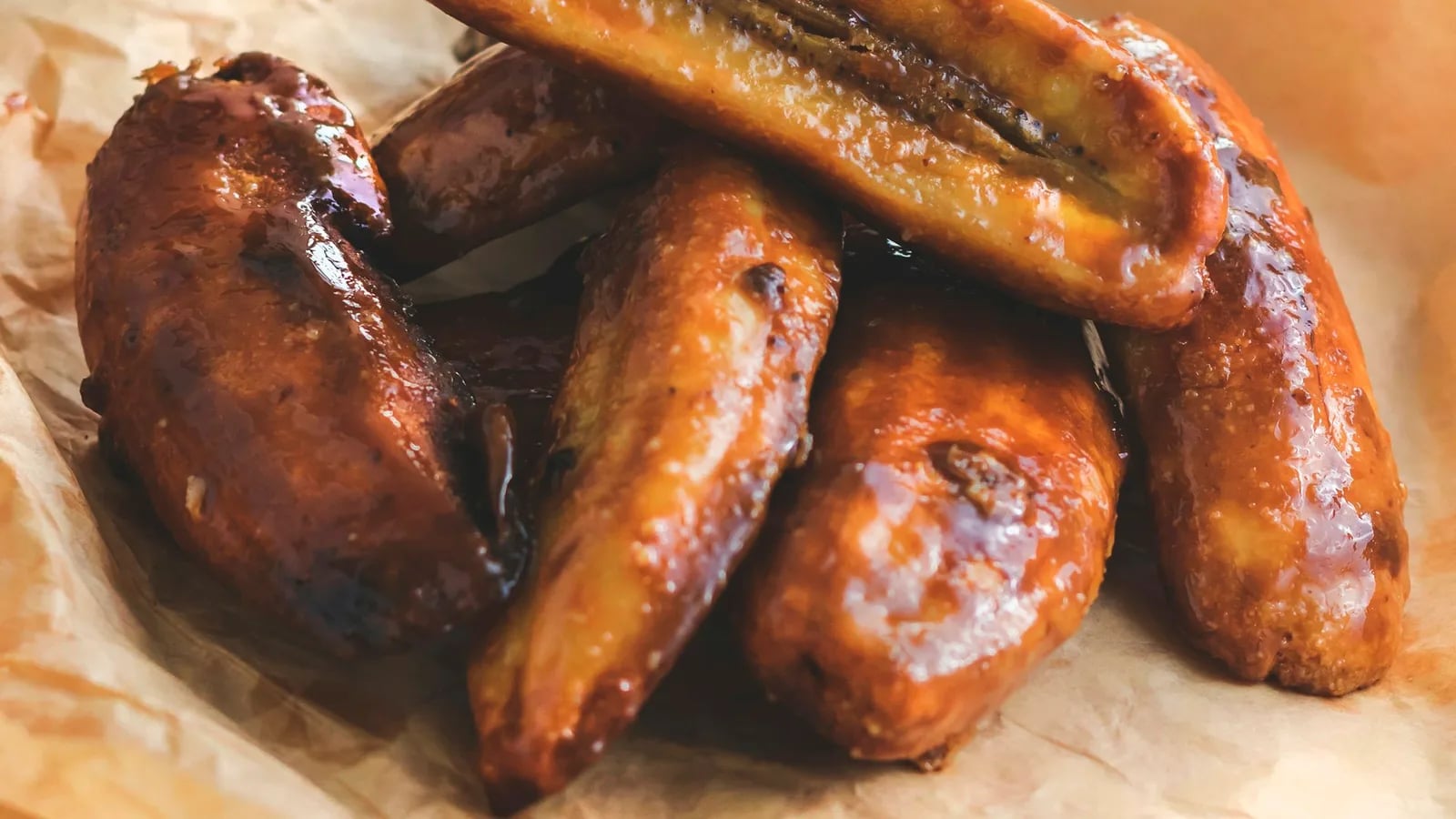
The plantain is tropical Africa's, the Caribbean's and Latin America's universal starch. People cook it from Cameroon to Peru, Jamaica to Ivory Coast. Yet when you first walk into an African grocery, you hesitate: what colour should I take? Green? Yellow? With black spots? Answer: it depends on what you're cooking. This guide tells you everything.
Plantain or dessert banana: what's the difference?
First thing to know: plantain is not a dessert banana. It is larger, firmer and starchier. It is generally eaten cooked; when very ripe it can also be eaten raw, although cooking usually improves its texture and flavour.
Plantain and banana are botanical cousins (genus Musa), but plantain contains much more starch, less sugar. That's why we eat it as a starch: fried, boiled, mashed, pureed, as chips.
The 4 ripeness stages of plantain
Plantain changes colour as it ripens, and each stage has its culinary use. Here's how to tell them apart:
🟢 Stage 1: Green plantain (very firm)
Skin: dark green, smooth, shiny. Flesh: white, very firm, almost chalky. Taste: starchy, slightly bitter, not sweet at all.
Ideal for:
- Plantain foufou (boil and mash like a purée)
- Boiled plantain to serve with ndolé, pondu, or okra sauce
- Tostones / smashed fries (South American style — fry, smash, refry)
- Crunchy plantain chips
- Plantain porridge for babies (no sugar)
🟡 Stage 2: Yellow plantain with some green
Skin: yellow-green, still a bit firm. Flesh: pale yellow, firm. Taste: beginning of sweetness, still neutral.
Ideal for:
- Boiled plantain as a side (softer than green)
- Oven-roasted plantain with a little oil and salt
- Mashed with butter and onion (Nigerian iwuk edesi)
🟡 Stage 3: Yellow plantain with black spots
Skin: golden yellow, scattered black spots. Flesh: golden yellow, tender. Taste: clearly sweet, fragrant.
Ideal for:
- Alloco (Ivorian fried plantain — the cult version)
- Dodo (Nigerian fried plantain, accompanies jollof)
- Missolé / mossolé (Cameroonian fried plantain)
- Oven-caramelised plantain (with a drizzle of honey)
- Sweet plantain fritters
🟤 Stage 4: Black plantain (very ripe, almost black)
Skin: mostly black, sometimes wrinkled. Flesh: very tender, almost creamy. Taste: very sweet, rich.
Ideal for:
- Maduros (Cuban/Dominican caramelised cubes)
- Plantain cake (African-style banana bread)
- Plantain pancakes
- Plantain with cocoa as dessert
Nkoh tip: If the skin is black but the flesh is still firm and orange, it's perfect for desserts. If the flesh is really soft and brown, it's too late for frying — head to baking.
How to choose a good plantain when shopping
Our criteria at NKOH SHOP when selecting imported plantains:
- No mould at the base or the top of the fruit
- Firm skin, without deep cuts
- Weight: a good plantain feels heavy for its size
- Sound: tap gently — not hollow (sign of internal over-ripeness)
- Uniform colour or clean gradient (green → yellow → black, no random brown spots)
How to store plantain at home
Green plantain (keep green)
Keep them at room temperature, in open air, away from dessert bananas (which speed up ripening with their ethylene). In an open fruit bowl, they'll stay green for 3 to 5 days.
Tip: If you want to keep them green longer, put them in the fridge in a plastic bag — it slows ripening. The skin will brown on the surface but the flesh will stay green and firm.
Plantain you want to ripen
Leave them on the counter, at room temperature. To speed up ripening (for instance to make alloco in 2 days), put them in a closed kraft paper bag with a ripe dessert banana — the released ethylene accelerates the process.
Ripe plantain ready to cook
If you don't have time to use everything, peel, slice and freeze. The frozen slices go straight to the pan for alloco — no need to thaw.
Cooked plantain (leftovers)
2-3 days in the fridge in an airtight container. Reheat in a pan (to keep crisp) or in the microwave (for soft versions).
The cult plantain recipes
Alloco / Dodo / Missolé — fried plantain (15 min)
The essential. Very ripe (stage 3) plantains cut in slices or diamonds, fried in hot oil (180°C) for 3-4 minutes per side until they're golden and caramelised. Salt them as they come out.
In Ivory Coast, served alongside grilled fish or braised chicken. In Nigeria, the must-have partner of jollof. In Cameroon, eaten as street food.
Plantain foufou (30 min)
Green plantains peeled, cut and boiled in salted water for 20-25 minutes until tender. Then pound (or mash with a fork) into a thick, elastic paste. Serve with a sauce — pondu, okra, ndolé.
Plantain chips (10 min)
Very green plantain, sliced very thin on a mandoline (1-2 mm). Deep-fry at 170°C for 2-3 minutes until golden and very crisp. Salt as they come out. Unbeatable for aperitif.
Oven-caramelised plantain (40 min)
Stage 3 or 4 plantain, halved lengthwise, placed on a tray, brushed with melted butter + a little honey + a pinch of cinnamon. In the oven at 200°C for 30-35 minutes. Magic caramelisation.
Does plantain have benefits?
Plantain is an excellent starch:
- Rich in potassium (more than a potato)
- Rich in vitamin A (as beta-carotene, mainly in ripe ones)
- High in fibre — good for digestion
- Ripeness, cooking method, portion size and accompaniments all affect glycaemic response; green plantain is not automatically “suitable for diabetics”
- Gluten-free — a starch option for intolerants
A portion (200 g cooked) delivers about 220 kcal — less than an equivalent portion of pasta or white rice.
Where to buy good plantain in Belgium
The plantain you find in classic Belgian supermarkets is often disappointing: too green and flavourless, or too ripe and spotted. At NKOH SHOP, we select arrivals directly from our specialised exotic suppliers, with superior-quality plantains:
- Green plantain (for foufou, boiling, chips)
- Yellow ripe plantain (for alloco, dodo, missolé)
- Black very-ripe plantain (for desserts) — often on order
You can buy by the whole bunch (8-12 plantains) or by unit, pick up at the Geraardsbergen store or have it delivered in Belgium, depending on the destination and shipping method chosen.
Question about current ripeness or a recent arrival? Message us on WhatsApp before ordering — we'll honestly tell you where we are.
Plantain FAQ
Can you eat plantain raw?
Green plantain is normally eaten cooked. Very ripe plantain can be eaten raw, but it is most often boiled, fried or baked for a more pleasant texture and flavour.
How to peel a green plantain?
The skin of a green plantain is very thick and sticky. Cut both ends, make 2-3 lengthwise incisions with a knife (just through the skin), then peel strip by strip. A ripe plantain peels like a dessert banana.
What does fried plantain taste like?
Sweet-savoury, slightly caramelised, soft inside, slightly crisp outside. Nothing like a bland banana — it's rich, fragrant, deep.
How many plantains for 4 people?
1 large plantain per person as a side, 2 per person as a main (foufou, boiled plantain + sauce).
Is plantain fattening?
No more than potatoes or rice. It's a starch — it provides energy. Fried, yes, like any fried food. Boiled or baked, it's very reasonable.