

 African Groceries
 Beauty & Care
 Beverages
 Home & Daily Life
 Other
Other Snacks & Candy
 Tobacco & Vape
Ingredients
Njansang or akpi: flavour, toasting and cooking uses
Identify and measure this aromatic thickening seed from tropical Africa.
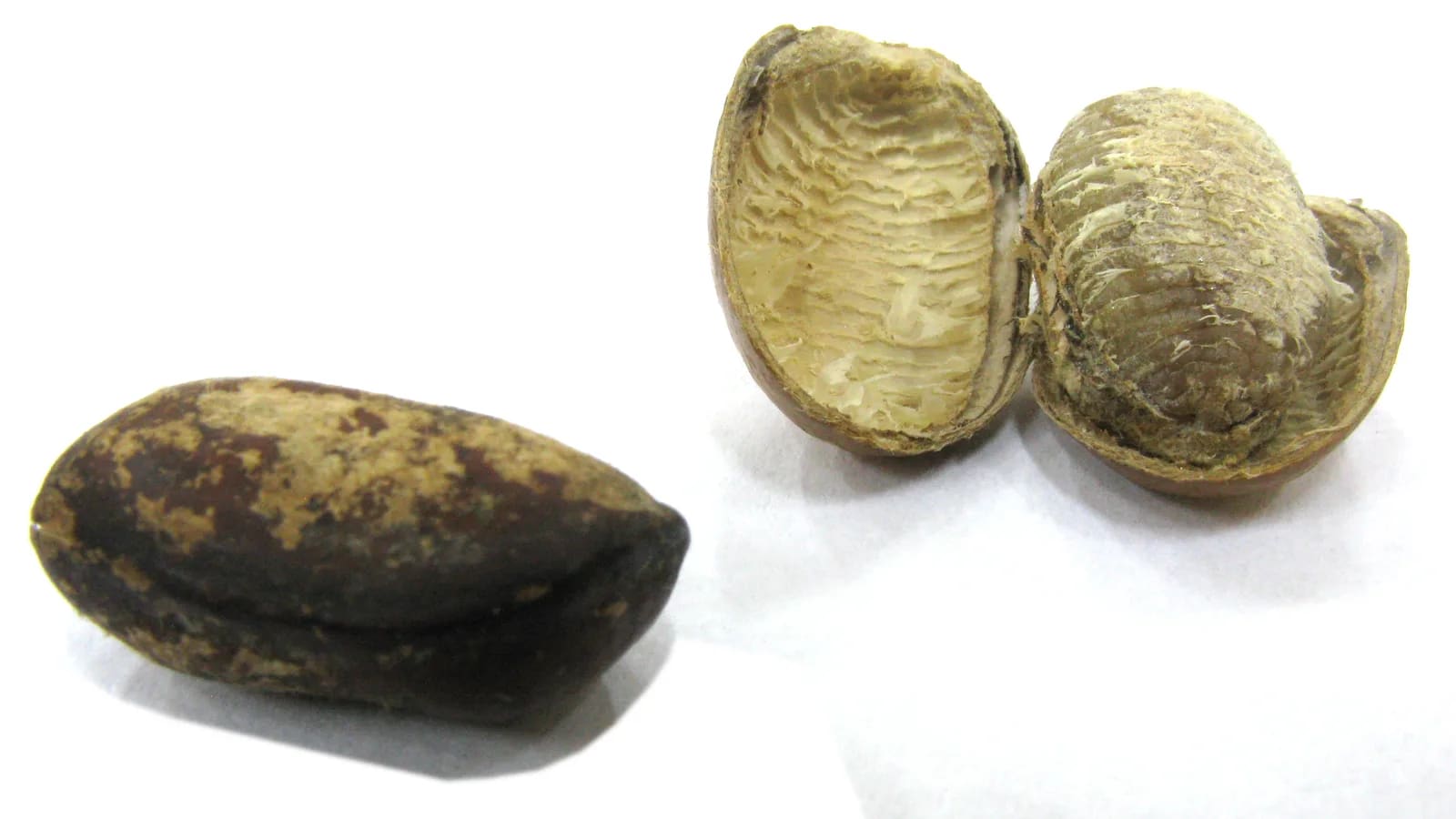
Photo credit: Laurie E. Clark and Terry C. H. Sunderland — Wikimedia Commons, public domain. Photo cropped.
Njansang, also written djansang, and akpi commonly refer to seeds of Ricinodendron heudelotii. They add aroma and body to Central and West African sauces.
Flavour
The seeds taste nutty and lightly earthy. Their natural fats create a rounder sauce without chilli heat.
Preparation
- Discard damaged seeds.
- Toast gently while stirring.
- Cool, then grind.
- Let the powder cook through.
Add measured spoonfuls to tomato, fish and meat sauces; too much can make the texture heavy.
Nutrition and storage
The seeds contain fats and other nutrients, but do not treat disease. Ground njansang can turn rancid, so buy modest amounts and store cool, dry and airtight.
FAQ
Are akpi and njansang identical?
The trade names usually refer to the same species; confirm the botanical name on the label.
Can it be used raw?
Some recipes do, although gentle toasting deepens the nutty flavour.