

 African Groceries
 Beauty & Care
 Beverages
 Home & Daily Life
 Other
Other Snacks & Candy
 Tobacco & Vape
Recipes
Traditional Senegalese mafé recipe — the real deal, step by step
Beef, pure peanut paste, root vegetables, white rice. The family mafé recipe as cooked in Dakar, adapted to ingredients easily found in Brussels.
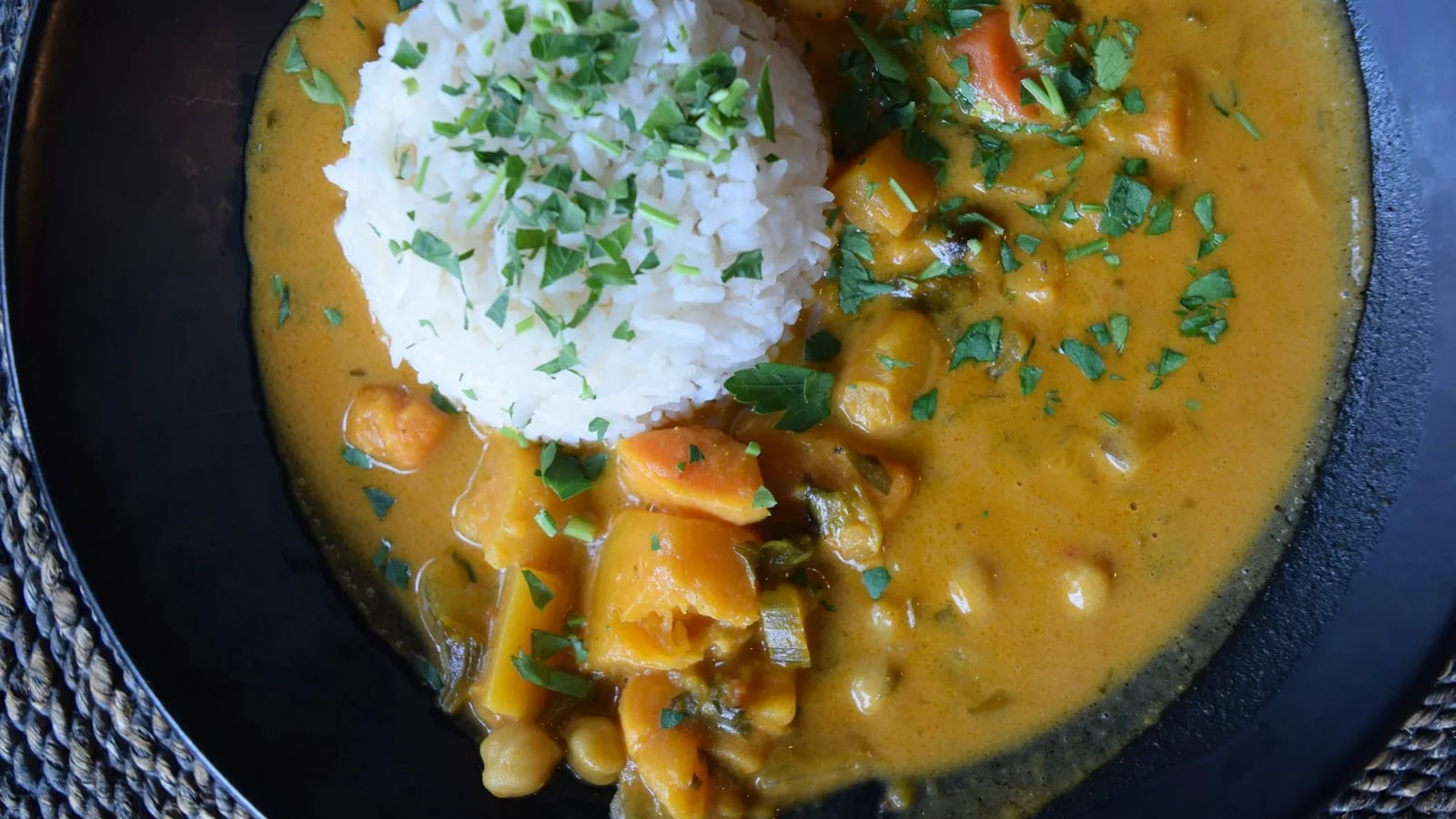
Mafé is the peanut sauce of West Africa. In Senegal it's served with beef, in Ivory Coast and Mali it's called tigadégué, in Cameroon it's also done with chicken. Here's the Senegalese version, the Sunday-with-family one — the one we've been cooking since childhood and adapted so it works with ingredients you can easily find in Belgium.
Before you start: three things to know about mafé
A successful mafé hinges on three details most online recipes miss:
- The peanut paste must be pure — not sweetened supermarket "peanut butter". Ingredients: 100% peanuts, period. If you see sugar, palm oil or "stabilisers", put the jar back.
- The meat must simmer before you add the peanut sauce. If you mix everything together, the paste will burn at the bottom and turn bitter.
- Concentrated tomato is not optional. It provides the orange-brown colour and the acidity that balances the richness of the peanut.
Ingredients (serves 6)
For the meat and base
- 1 kg stewing beef (chuck, shank or neck), cut in 4 cm cubes
- 2 medium yellow onions, sliced
- 4 garlic cloves, crushed
- 1 piece of fresh ginger (3 cm), grated
- 3 tbsp tomato paste
- 1 tin peeled tomatoes (400 g)
- 2 tbsp neutral oil (peanut or sunflower)
- 1.5 L hot water
- 2 Maggi shrimp or chicken cubes
- 1 whole bird's-eye chilli (to taste)
- Salt, black pepper
For the peanut sauce
Allergen: this recipe contains peanuts. Do not serve it to anyone with a peanut allergy and prevent cross-contact.
- 300 g pure peanut paste (unsweetened)
- 1 tsp Penja pepper (or black pepper as fallback)
- 1 bay leaf
For the vegetables (adapt to the season)
- 1 sweet potato, cut in large cubes
- 2 carrots, cut in thick slices
- 1 cassava (≈ 400 g) — peeled, cut, central thread removed
- 1 small white cabbage, in quarters
- 1 long African aubergine (jakatu) or classic aubergine
To serve
- 500 g long-grain fragrant rice (ideally Senegalese broken rice)
- 1 raw red onion, finely sliced + 1 tbsp vinegar (garnish)
Step-by-step recipe
Step 1 — Sear the beef (15 min)
Heat oil in a heavy-bottomed pot on high. Sear the beef cubes in small batches — not all at once, or they'll boil instead of browning. When the cubes are well browned on all sides, set aside on a plate.
Step 2 — The aromatic base (10 min)
In the same pot (don't wash it), lower the heat to medium. Add the onions and let them soften 5 minutes without colouring. Add the crushed garlic and ginger, stir 1 minute. Add the tomato paste: let it caramelise 3 minutes, stirring — that's what will give the final brown-orange colour.
Step 3 — The tomato sauce (10 min)
Add the peeled tomatoes, crushing them with a fork. Salt, pepper, add the whole chilli (unpierced if you don't want it too hot). Let reduce 8 to 10 minutes on medium heat, until the oil rises at the edges — that's the Beninese signal: "the sauce has spoken".
Step 4 — Cook the meat (1 h)
Return the meat to the pot. Add 1.5 L of hot water, the Maggi cubes, the bay leaf. Cover and let simmer 1 hour on low heat. Check occasionally: the meat should shred slightly with a fork.
Step 5 — Dilute the peanut paste (5 min)
This is the key step. Never put the paste directly in the pot. Take 2 large ladles of broth, put them in a bowl with the peanut paste, and whisk until you get a smooth cream — like a pastry cream. You can add a 3rd ladle if it's too thick.
Step 6 — Incorporate the peanut sauce (25 min)
Pour the diluted peanut cream into the pot. Stir well. Add the sweet potato, carrots, cassava. Let cook 20 minutes uncovered, stirring every 5 minutes to prevent the sauce from sticking. The sauce will thicken, become coating.
Step 7 — The green vegetables (10 min)
Add the cabbage and aubergine. Continue cooking 10 minutes covered. Adjust salt and pepper.
Step 8 — The white rice
While the sauce finishes, cook the rice: 2 volumes of salted boiling water for 1 volume of rice, cover, low heat, 18 minutes. Let rest 5 min off the heat before serving.
Step 9 — Plating
In a large deep plate, place a dome of rice in the centre, ladle peanut sauce with a portion of meat and vegetables around. Crown with the raw red onion in vinegar — that's what wakes everything up. Serve immediately, very hot.
Family tips
For a creamier sauce
Add a tablespoon of red palm oil (dendê) at the end of cooking. Denser colour, typical West African aroma. Dose carefully: it's powerful.
If the sauce gets too thick
Loosen with boiling water (never cold — it breaks the emulsion). One ladle at a time.
If the sauce is too liquid
Continue cooking uncovered. Never add flour or cornstarch: that's not mafé, that's a white sauce.
The chilli
If you're eating with children, remove the chilli at the end of the meat cooking. For adult fans: lightly crush it at the end to release the heat.
Classic variations
- Chicken mafé: replace beef with deboned chicken, reduce cooking to 30 min total.
- Fish mafé: capitaine or thiof — add last, only 15 min cooking.
- Vegetarian mafé: double the root vegetables, replace Maggi broth with homemade vegetable broth. Without meat, the peanut sauce remains very satisfying.
Where to find ingredients in Belgium
Most ingredients in this mafé are in NKOH SHOP's African section:
- Pure peanut paste — Dakatine, Mamie Coco, Nina brands (100% peanuts)
- Bird's-eye chilli, Penja pepper
- Maggi shrimp and chicken cubes
- Fresh cassava when in stock (delivered within 48 h)
- Senegalese broken rice, the real one — not basmati
Delivery in Belgium — the lead time depends on the destination and the shipping method chosen.
FAQ
Can you make mafé in advance?
Yes — it's better the next day. The sauce gains depth after a night in the fridge. Reheat on very low heat, adding a ladle of hot water if the sauce has thickened.
Can you freeze mafé?
Yes, no problem. Without the green vegetables (cabbage, aubergine) which release water upon thawing. The base of meat + peanut + root vegetables keeps for 3 months in the freezer.
How many calories in a portion of mafé?
Energy content varies considerably with the meat, amount of peanut paste, oil, rice and serving size. For a reliable figure, calculate it from the exact products and quantities used.
What's the difference between mafé and tigadégué?
Very little: tigadégué is the Malian and Burkinabé name for the same type of dish. In Mali they often add okra at the end, and the chilli is more present. The base — meat + peanut + tomato — is identical.
Summary
A successful mafé is: patience (1 h 30 simmering, no shortcuts), good peanut paste (truly pure), caramelised tomato paste at the start of cooking, and the raw red onion at the very last moment. The rest is common sense.