

 African Groceries
 Beauty & Care
 Beverages
 Home & Daily Life
 Other
Other Snacks & Candy
 Tobacco & Vape
Recipes
Jollof rice — the Nigerian recipe (and the feud with Ghana)
West Africa's most disputed dish: the Nigerian jollof recipe, why it differs from the Ghanaian one, and how to nail it perfectly at home.

Jollof is the rice that triggers wars on Twitter. Nigerians and Ghanaians have been fighting over paternity for years — each swears their version is the original, the best, the only acceptable one. The truth? Both are delicious, and both actually derive from the Senegalese thiéboudienne. Here's the Nigerian version — the best known in the Belgian diaspora — with its secrets and tips.
What is jollof?
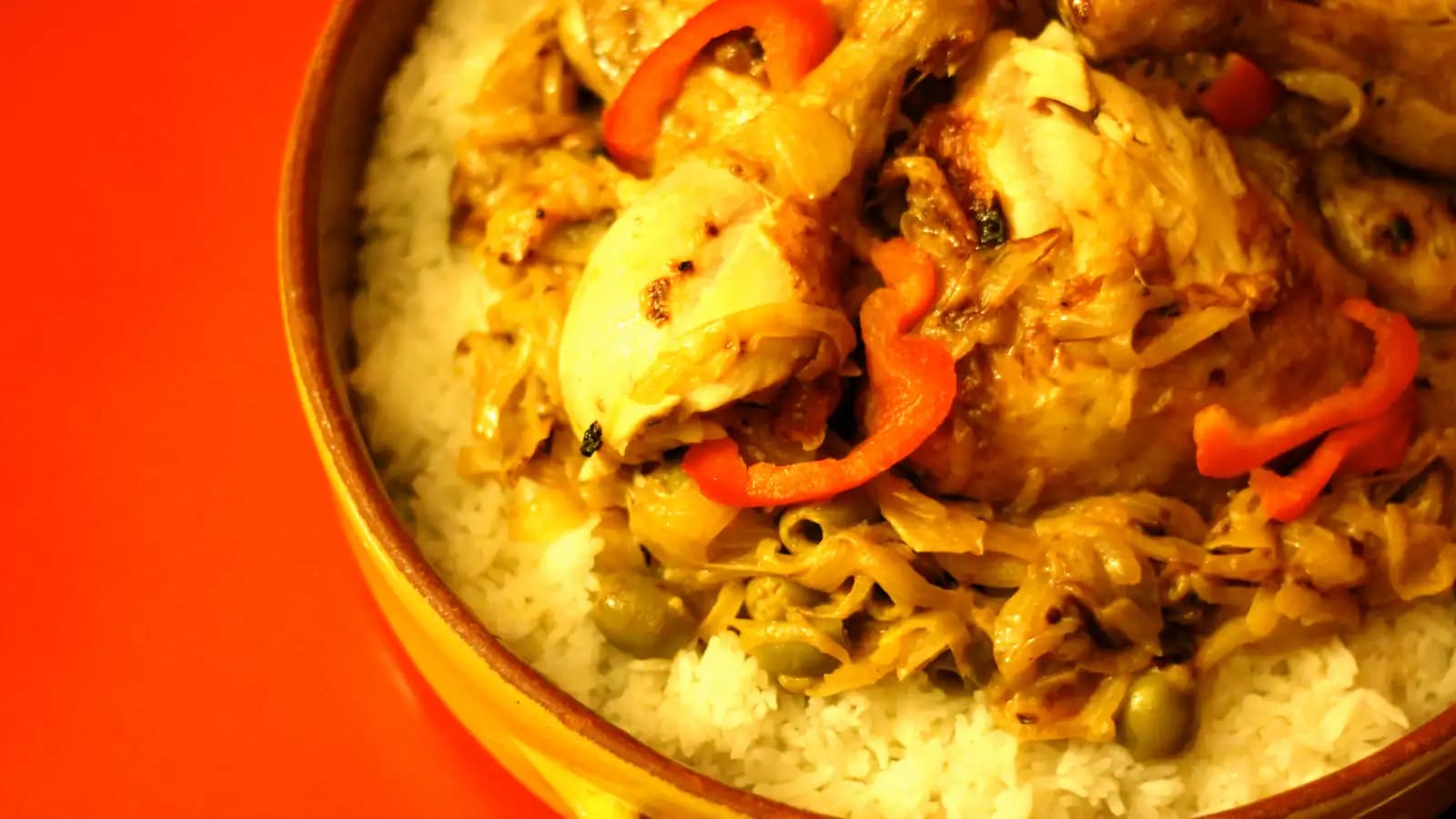
Jollof (also spelled djollof) is a rice cooked in a spicy tomato sauce, often enriched with chicken, fish or beef. The grain absorbs the sauce during cooking and takes on a deep orange-red colour, almost braised. Done right, it's tender, slightly smoky, fragrant without being aggressive.
It's eaten across West Africa — from Senegal to Nigeria — with strong national variations. In Cameroon too, under the name tomato sauce rice.
Nigerian vs Ghanaian vs Senegalese jollof: the recipe war
To settle the debate (or join it knowingly), here are the real differences:
Senegalese jollof (the "grandfather")
Senegalese thiéboudienne is the ancestor of all three. Broken rice, whole fish, vegetables (cabbage, carrot, cassava), lots of bissap and lemon. Hearty, almost rustic dish. Light orange colour.
Ghanaian jollof
The rice used is typically basmati or long-grain fragrant. Ghanaians make a shito (chilli sauce) on the side, and the cooking is faster — the rice stays separate, distinct. Bright orange colour.
Nigerian jollof (our recipe)
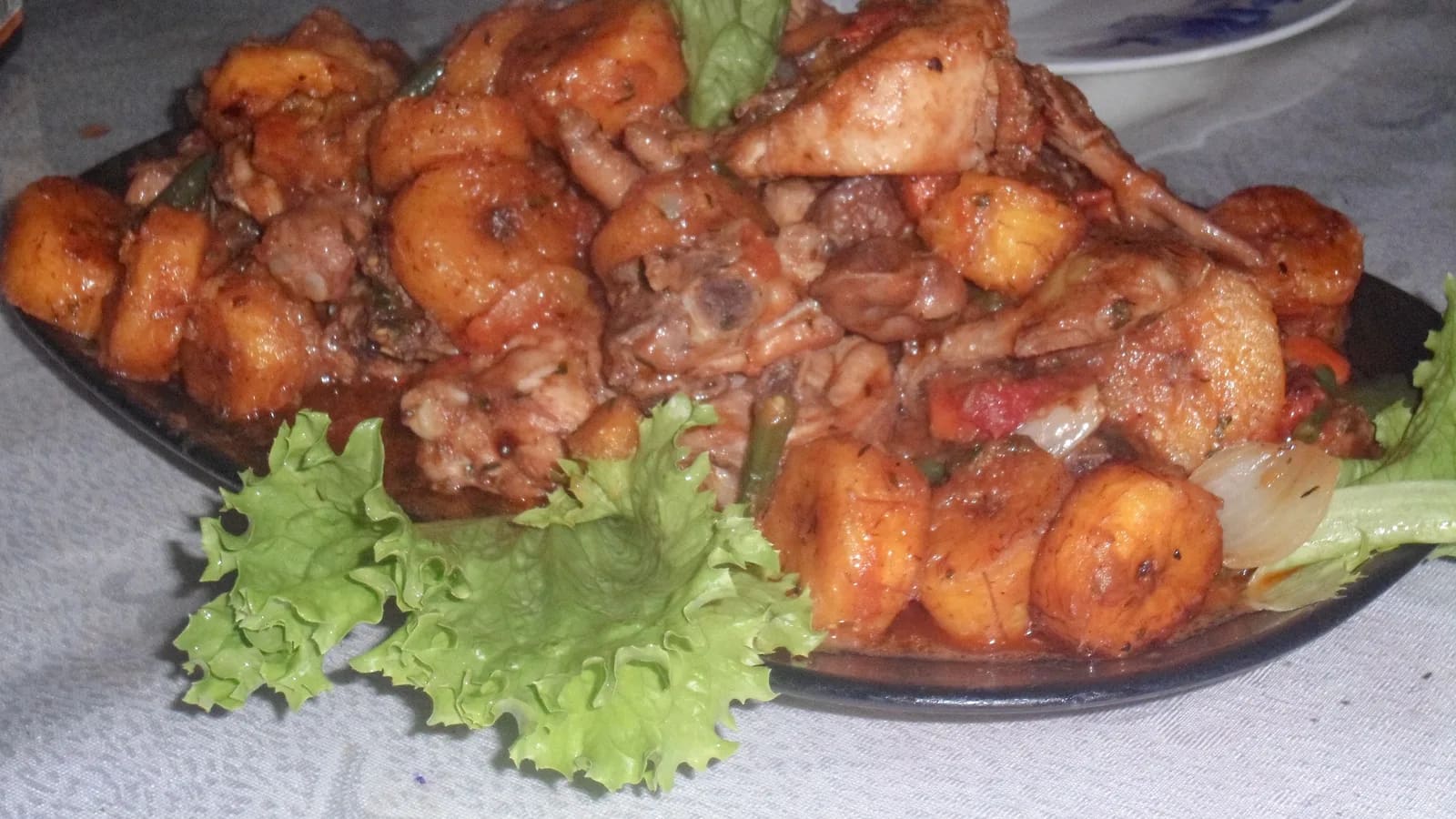
Nigerians use long-grain rice (often parboiled), cook longer for a "party jollof" with smoky flavour (slightly burned at the bottom — that's wanted!). Deep orange-red. Often accompanied by fried chicken, fried plantain (dodo), coleslaw.
Ingredients (serves 6)
- 500 g long-grain rice (parboiled or quality basmati)
- 800 g fresh ripe tomatoes (or 2 tins of 400 g peeled tomatoes)
- 3 tablespoons tomato paste
- 2 red bell peppers (for colour and sweetness)
- 2 scotch bonnet or bird's-eye chillies (tolerance permitting — it's hot at its source!)
- 2 large onions
- 4 garlic cloves
- 1 piece of fresh ginger (3 cm)
- 1 teaspoon dried thyme
- 1 teaspoon curry powder (Nigerian-style, yellow-orange)
- 1 bay leaf
- 2 Maggi cubes (chicken or shrimp)
- 100 ml neutral vegetable oil
- 800 ml chicken stock
- Salt
- To serve: roasted or fried chicken, fried ripe plantain, coleslaw
Step-by-step preparation
1. Prepare the base sauce — the "stew" (15 min)
Blend together the fresh (or peeled) tomatoes, the red bell peppers, the chillies, one whole onion, the garlic and the ginger. You get a thick orange-red purée. That's the jollof base — all its colour and taste come from here.
In a large heavy-bottomed pot, heat the oil and brown the second sliced onion for 5 minutes. Pour in the tomato purée and let cook for 10 minutes on high heat, stirring — the sauce should thicken and the oil should rise to the surface.
Add the tomato paste, the thyme, the curry, the bay leaf, the Maggi cubes. Stir. Cook for another 5 minutes.
2. Rinse the rice (5 min)
Rinse the rice under cold water until the water runs clear — this removes the surface starch and prevents the rice from becoming sticky. Drain.
Nkoh tip: some Nigerian chefs soak the rice for 30 minutes before cooking — it helps separate the grains.
3. Cook the jollof (25 min)
Pour the rinsed rice into the sauce, stir to coat each grain. Add the hot chicken stock — the water should cover the rice by 1 cm, no more.
Cover tightly (with a tea towel between the lid and the pot to block steam) and let cook for 20-25 minutes on very low heat. Don't lift the lid before 15 minutes — the steam does all the work.
4. The "party jollof" — the smoky bottom (5 min)
When the rice is almost cooked, crank the heat to max for 2-3 minutes — the bottom will lightly stick and caramelise, giving the signature smoky flavour of party jollof. Turn off the heat, let rest covered for 5 minutes before serving.
How to serve jollof
Jollof is served as a main dish, accompanied by:
- Fried or roasted chicken — the Nigerian classic
- Dodo (fried ripe plantain in slices)
- Homemade coleslaw (grated cabbage + carrot + mayo)
- Hard-boiled egg cut in half, placed on the rice
- Simple green salad
Pro tips
The right rice makes the difference. Use parboiled or quality basmati. Not risotto rice, not Japanese rice, not sticky industrial basmati. At NKOH SHOP we have Nigerian Mamy parboiled, which is perfect.
Don't stir during cooking. Once you've put the lid on, let the steam work. Stirring would break the grains and release starch.
"Party jollof" on wood fire. In Nigeria, the real party jollof is cooked over wood, giving an even smokier flavour. Failing that, the high heat at the end of cooking comes close.
The tomato/pepper ratio. Red bell peppers soften and round out the flavour. Without them, the sauce is too acidic. Don't skip them.
Variants
- Seafood jollof: add shrimp and squid 5 minutes before the end
- Vegetarian jollof: replace chicken stock with vegetable stock, add mushrooms and peas
- Banga jollof: Niger Delta version, with palm oil instead of neutral oil — earthier flavour
- Jollof with beans (jollof rice with beans): cooked black beans added — nourishing peasant version
Where to buy jollof ingredients in Belgium
Jollof uses ingredients partially available in classic supermarkets (tomatoes, bell peppers, onions), but for the authenticity of the Nigerian flavour, certain products make the difference:
- Nigerian parboiled rice (Mamy, Royal Stallion, Caprice) — much better than European long-grain
- Scotch bonnet chilli dried or powdered — Nigeria's signature heat
- Lion curry (the Nigerian yellow-orange, not the one from European supermarkets)
- Maggi cubes chicken or shrimp, imported from Africa
- Ripe plantains for the dodo
- Gino or Tom Tom tomato paste (the Nigerian brands)
These are stocked at NKOH SHOP, subject to current availability. You can pick up at the Geraardsbergen store or get delivery in Belgium, depending on the destination and shipping method chosen. Question about a specific product's availability? Message us on WhatsApp.
Jollof FAQ
What rice should I use for jollof?
Long-grain parboiled, ideally Nigerian (Mamy, Royal Stallion). Indian basmati works too. Avoid sticky rices (Japanese, arborio).
How long does jollof keep?
3-4 days in the fridge. It reheats very well in the microwave with a few drops of water.
Does jollof freeze well?
Yes, but the rice loses some texture. Better: prepare the sauce in advance and cook fresh rice on the day.
What about oven jollof?
Some cook the jollof in the oven after phase 1 — the enveloping heat gives a more uniform result without risk of burning. Worth trying!
And the "jollof war"?
Ghana and Nigeria clash on social media every year. Official truth: the best jollof is your mother's. Period.